
Your outfit can be the beginning of a different kind of night. A sculpted leather dress, a sharply cut waistcoat, a mesh layer or one striking accessory can make familiar clothes feel entirely your own.
The place to begin is the invitation. Choose your party, understand its dress code, then build a look around your preferred silhouette, materials and coverage. This guide offers outfit ideas for women and men; take inspiration from either edit, whatever your gender or style.
The quick answer: match the event first, choose one focal point, and try the complete outfit before the night. The looks below are styling suggestions, not a promise of entry.
Start with the event's dress code
An invitation to wear creative black clothing gives you a different starting point from a strict fetish dress code. Read the rules for the specific date, including footwear and prohibited items. A ticket does not necessarily override the door policy.
| What the invitation says | How to approach your outfit |
|---|---|
| Creative clubwear or alternative black | Explore strong shapes, interesting textures and deliberate accessories, within the organizer's examples. |
| Strict fetish dress code | Plan the complete look. Ordinary black clothing with one accessory may still fall short. |
| A named material or theme | Build around that requirement rather than assuming a generic outfit will work. |
For example, Torture Garden's published dress code excludes several ordinary black wardrobe staples and expects a complete styled look. Wasteland also describes its dress code as strict. These illustrate why advice for one event cannot guarantee admission elsewhere.
If a rule is unclear, ask the organizer before committing to an outfit. You can also read our guide to what a dress-code party means.
What beginners can wear
Start with the piece you are most excited to wear: a dress, a pair of trousers or a structured top. Build the rest around it instead of buying a complete unfamiliar wardrobe at once. Repeating one finish, such as matte black with restrained silver hardware, gives separate pieces a more coherent feel.
At a flexible event, this may be an approachable first look. At a strict event, use the organizer's guidance to develop it further. Decide on coverage yourself; confidence does not require copying the most revealing outfit in the room.
Outfit ideas for women
Think in silhouettes: a defined waist, a clean dress shape, or a long uninterrupted line. These three directions offer different levels of coverage and can be adapted to the party's rules.
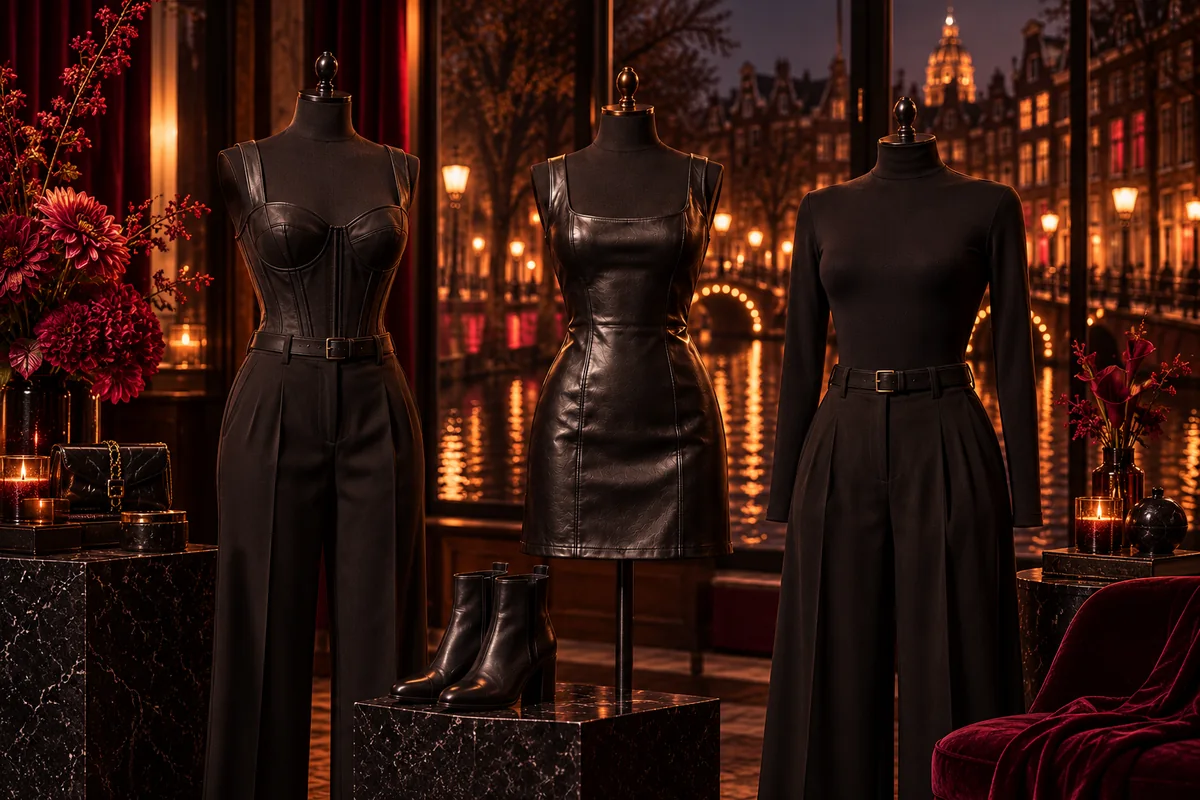
A structured top and tailored trousers
Pair an opaque corset-style top with high-waisted trousers. A wider trouser leg balances the fitted top; a straighter leg creates a cleaner outline. Keep the accessories restrained so the shape remains the focus. Conventional fabric trousers are an option only where the rules permit them.
A leather or faux-leather dress
Let the material and cut lead. Choose a length and neckline you enjoy wearing, then finish with simple boots or a coordinated accessory. A short hem is a styling choice, not an obligation. Check that the dress remains comfortable when seated as well as standing.
A bodysuit with deliberate layers
An opaque bodysuit can create a continuous line beneath trousers or a skirt. A mesh outer layer adds texture while leaving coverage under your control. Test the fastenings beforehand and make sure the outfit is practical to manage during a long evening.
Outfit ideas for men
Look beyond a black shirt alone. Proportion, texture and the relationship between pieces make an outfit feel considered. You can create a strong look with full coverage; showing your chest is not a universal requirement.
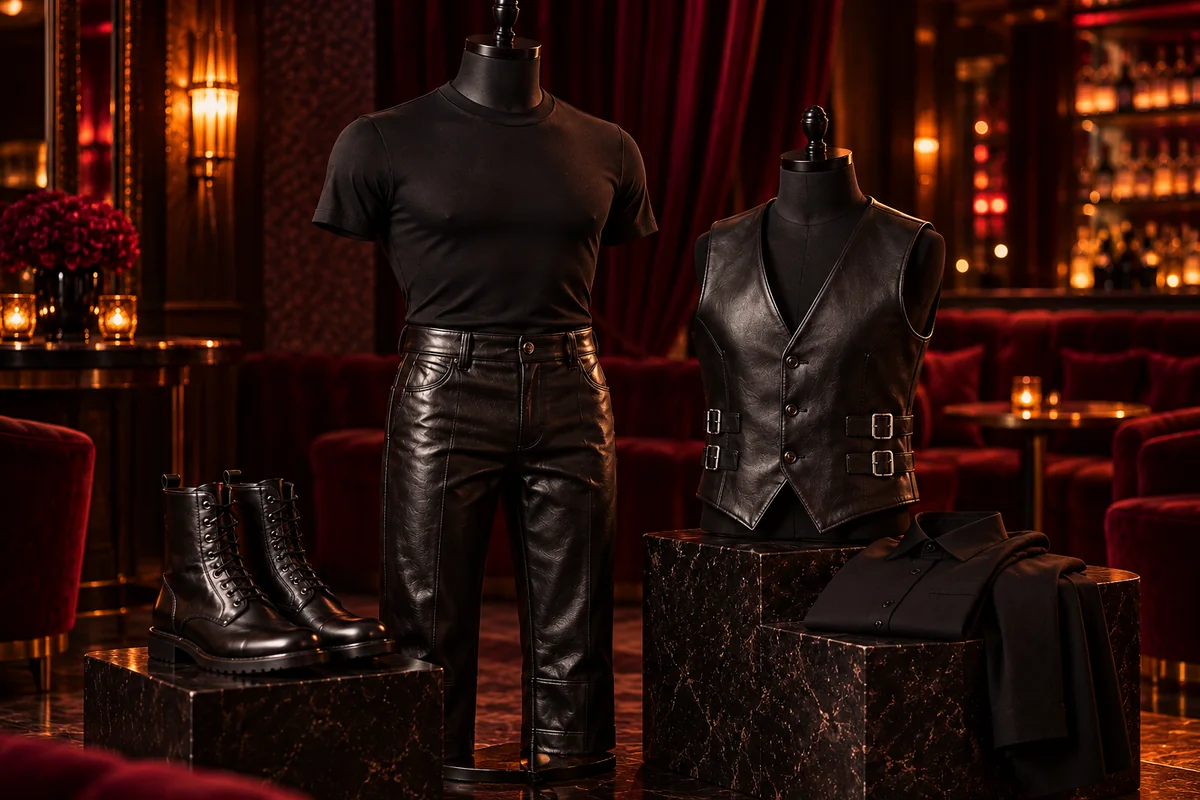
Leather trousers and a fitted top
For events that allow this combination, pair leather or faux-leather trousers with a neat, close-fitting top and coordinated footwear. Keep trouser length intentional so it sits cleanly over your shoes. A cotton T-shirt remains unsuitable at some strict parties, even with leather trousers.
A waistcoat as the focal point
A shaped leather waistcoat gives the outfit structure without needing many additional accessories. Consider how its neckline, buckles and hem work with the layer beneath it. Repeat one hardware finish rather than combining several competing details.
Mesh or a harness as a layer
Where permitted, a mesh top over an opaque base or a fashion harness over a fitted garment can add definition. Check the whole outfit against the rules. Adding a harness does not automatically make otherwise prohibited streetwear acceptable.
Choose your materials: leather, latex and mesh
Material can change the mood of a simple shape. Rather than wearing every texture at once, let one lead and use a second as a smaller contrast.
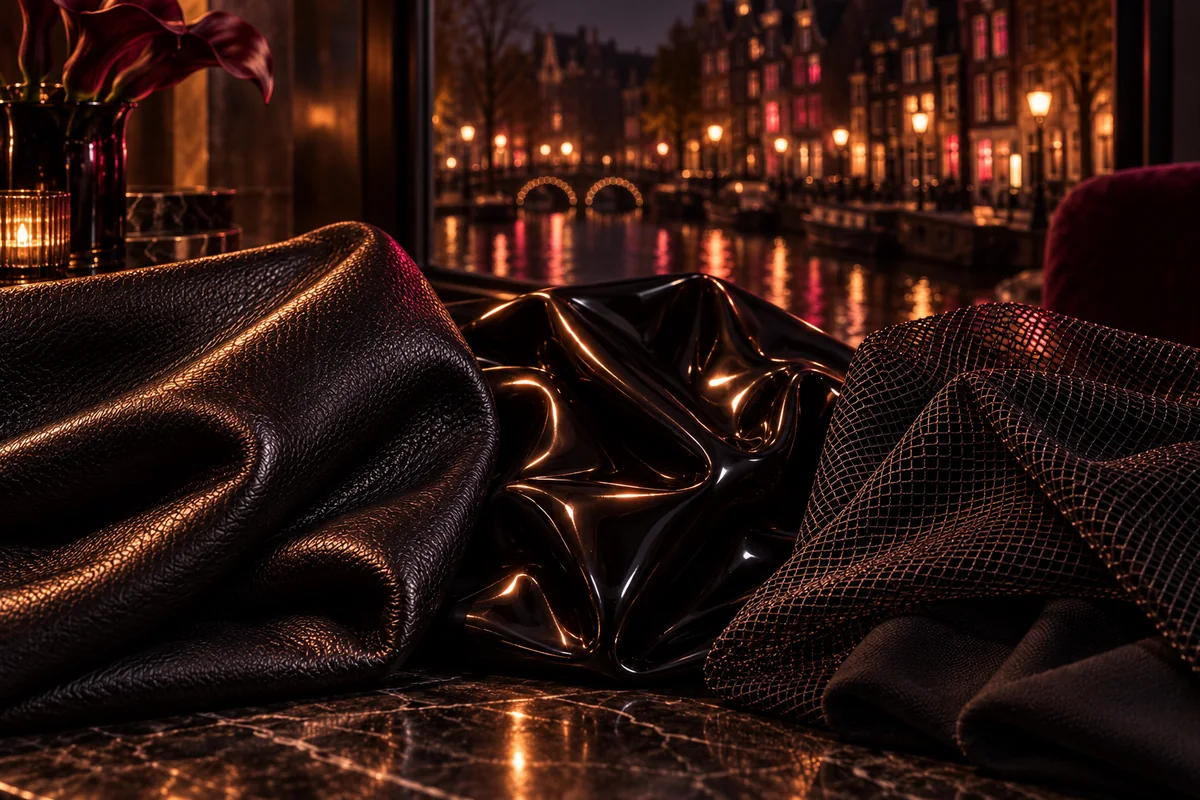
| Material | Styling direction | Before you go |
|---|---|---|
| Leather or faux leather | A structured dress, trousers or a waistcoat can anchor the look. | Check fit at seams and joints; follow the garment's own care instructions. |
| Latex, PVC or vinyl | Use gloss as a focal point, either in a garment or a smaller accent. | These materials are not interchangeable. Follow the specific product's dressing and care guidance. |
| Mesh | Layer an open texture over an opaque base for adjustable coverage. | Check the finished look in brighter light, including what remains visible beneath it. |
Borrowing, restyling or buying second-hand can help you experiment before committing to expensive pieces. Check the condition and fit of anything you choose; cost alone does not make an outfit more convincing.
Add one statement accessory
A collar, wrist cuffs, gloves or a harness can give a simple composition its focal point. Pick the detail you want people to notice first and allow the other elements to support it.
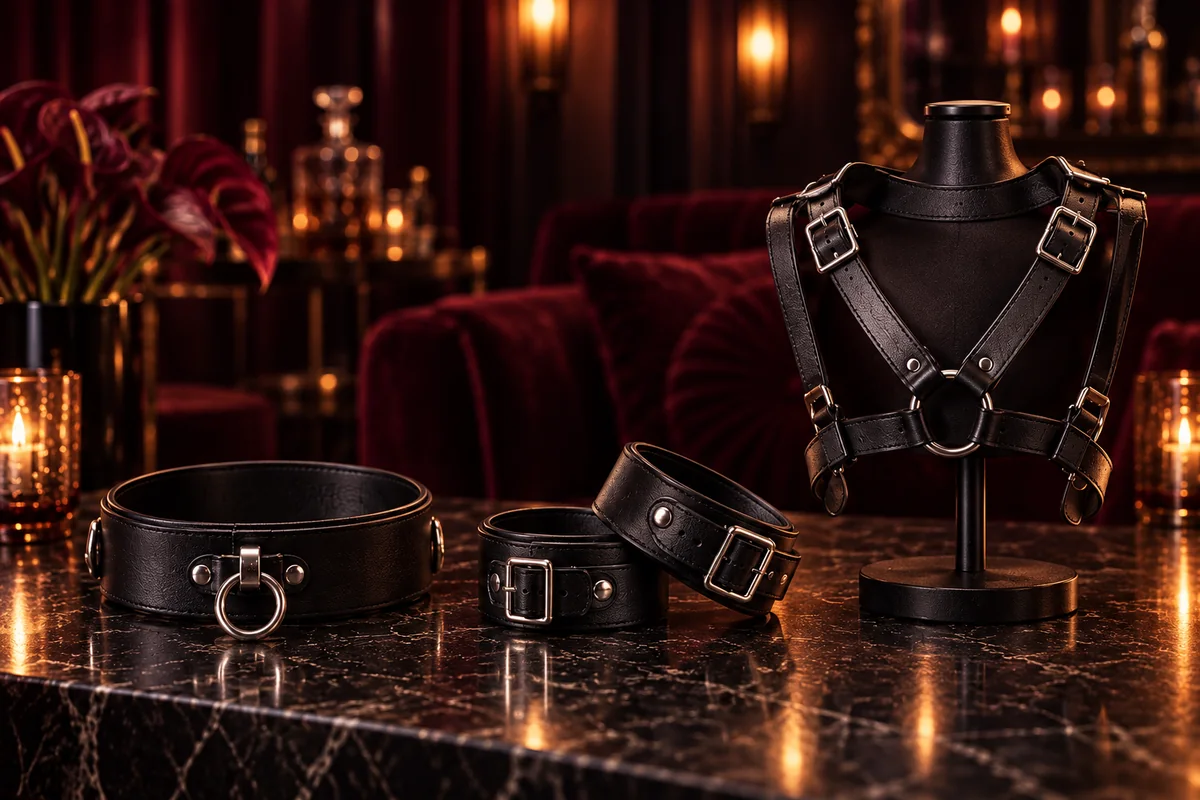
Try accessories with the exact garments you will wear. Check that closures are secure, edges feel comfortable and loose details do not catch when you move. Keep bulky or projecting pieces out of your dance-floor look if they get in your way or conflict with venue rules.
Treat other people's accessories as personal items. Their appearance does not tell you someone's identity, role, boundaries or willingness to interact.
Comfort matters more than you think
Dress for the whole evening: the journey, any queue, the venue and the trip home. Try a short rehearsal in the complete outfit. Walk, sit, raise your arms and dance; adjust anything that needs constant attention.
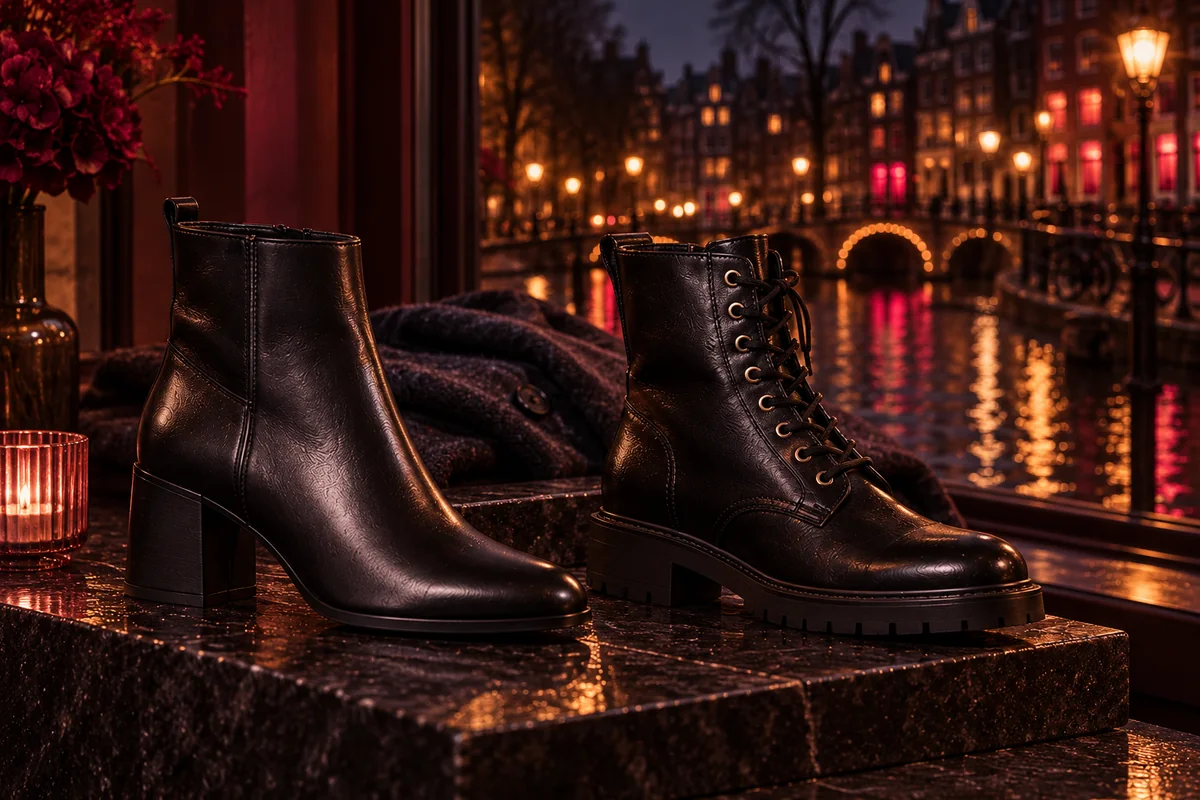
Heels are not a requirement unless an event's unusual theme specifically calls for them. Choose footwear you already know you can manage, then check it against the dress code and the venue's surfaces. A stable sole may suit you better than a dramatic heel.
Bring an outer layer if you need it, and check the cloakroom and bag policy. If you plan to change at the venue, confirm that this is possible rather than assuming a changing room will be available. Keep any outfit you must show at the door accessible.
What to avoid
Avoid building the evening around an untested purchase or hoping a small accessory will cancel out a prohibited item. Denim, sportswear, ordinary suits and basic black garments can be excluded at stricter events; other nights have different rules.
Also reconsider anything that repeatedly slips, restricts the movements you want to make, or requires frequent readjustment. An outfit should give you room to enjoy yourself. Clothing or symbols that mock or demean other people do not belong in the look.
Privacy, photography and consent
Take your outfit photos before arriving, or use a designated photo area when the event permits it. Follow the venue's camera rules and get permission before including anyone else. A public event listing does not make guests' images public property.
Clothing is never consent. A revealing outfit, a collar or a harness is not permission to touch, photograph or involve someone. Dressing boldly also places no obligation on you. Read more in our guide to kink party etiquette.
Check the event page before you go
- Read the dress code for the exact event and date.
- Check footwear restrictions and any prohibited items.
- Confirm entry time, tickets and identification requirements.
- Check the cloakroom, bag and changing arrangements.
- Read the phone and photography rules.
- Try on the whole outfit and plan your transport home.
For a broader introduction, read First Time at a Kink Party.
Frequently asked questions
What should I wear to my first fetish party?
Choose the event before choosing the outfit. Use its dress code to guide your materials, silhouette and accessories, then test the complete look. The illustrated combinations here are starting points, not universal admission standards.
Can I go without latex or leather?
That depends on the event. Some accept expressive alternative clothing or other materials; others specify a particular style. Look at the organizer's current examples and restrictions before deciding what to buy or wear.
Is an all-black outfit enough?
Sometimes, but the color alone is not a guarantee. Strict events may reject ordinary black tops, trousers or dresses. Check the complete outfit, including footwear, against the event's actual policy.
Are jeans or trainers allowed?
Only if the event permits them. Do not treat black denim as automatically different from other jeans. Ask about particular shoes when comfort or accessibility makes the published guidance difficult to follow.
Do I need to dress revealing?
There is no universal requirement. Look for an event whose clothing expectations suit your comfort and choose your coverage within those rules. Full-coverage styling can still have a distinctive shape, finish and personality.
Should I bring a change of clothes?
Consider your transport, the weather and how you expect to feel afterward. Confirm the bag, storage and changing rules first, and keep any outfit the door team needs to inspect easy to reach.
Find a night that fits your style
Explore the KinkyGo event map, discover a night that interests you, and open the organizer's official details before making plans. Your outfit can set the mood; choosing the right event gives it a place to belong.
KinkyGo is an independent discovery guide. The illustrations show imagined styling examples, not actual venues or an organizer's approved outfits. Events are for adults aged 18 and over.